In partnership with


Finance is getting pulled toward the same question from three different directions.
What can we see earlier, trust more, and act on faster?
That matters for price planning. It matters for AI agents entering finance workflows. It matters for IT governance that was not built for this much speed. The CFO advantage now is not just having better tools. It is knowing which signals deserve attention before they become expensive decisions.
The pressure on finance right now is not just speed. It is translation. More signals are arriving faster, but they only become useful when someone can turn them into decisions the business actually trusts. If that handoff is slow or muddy, risk compounds quietly.
That is why Wispr Flow feels relevant here. It helps turn thoughts into words faster, which can make high-stakes communication clearer when timing and precision both matter.
4x your communication output. Same quality. No burnout.

The bottleneck isn't what you want to say — it's how long it takes to type it. Wispr Flow removes the bottleneck.
Speak naturally and get polished, send-ready text for executive summaries, client updates, board recaps, investor notes, or just the 30 Slack messages you're behind on. Flow strips filler, formats numbers and lists, and preserves your tone.
Used by teams at OpenAI, Vercel, and Clay. 89% of messages sent with zero edits. Works in every app on Mac, Windows, and iPhone.
THE NUMBER
3.6%
That is the latest CFO price growth expectation for 2026 cited in the San Francisco Fed analysis.
The number matters because CFOs are not making abstract guesses about inflation. They are looking at their own costs, demand, pricing power, and business conditions. That gives finance leaders a practical window into what companies may actually do with prices, not just what economists expect.
For CFOs, this is not only a macro signal. It is a planning signal.
THE CFO EDGE: The Signal Governance Map

Finance leaders are urged to accelerate their actions, but increasing speed without proper governance merely raises the risk. This is particularly relevant now, as pricing pressures continue to influence planning. Additionally, AI agents are increasingly integrated into real finance workflows. Meanwhile, IT governance is being challenged by tools that can proliferate more quickly than conventional approval procedures.
The CFO needs a better map.
Step 1: Separate external pressure from internal response
Price growth expectations are valuable as they show how companies make pricing decisions. However, the CFO must interpret these insights within the context of the business model. Which costs are prone to change? Which customers can handle price increases? Which products have pricing room? Are there contracts that restrict flexibility? What assumptions need rethinking before the next forecast? The aim isn't to respond to every signal but to identify which signals warrant a plan adjustment.
Step 2: Decide where AI agents can act
AI agents are different from dashboards. A dashboard shows. An agent can coordinate, execute, draft, reconcile, route, flag, or recommend. That makes the operating question much sharper. Where can the agent assist? Where can it act? Where does a human need to approve? Where does finance need a complete audit trail? Where does the risk outweigh the speed? Without those boundaries, automation can outrun accountability.
Step 3: Treat governance as an operating system
Much of governance still operates like a checkpoint.
Review the tool. Approve the use case. Create the policy. Move on.
That is too slow for AI adoption. Finance needs governance that continues to work after launch. Access rules. Data standards. Model oversight. Workflow ownership. Exception handling. Controls. Monitoring. Escalation. Review cadence. Governance cannot be a document that sits outside the work. It has to run inside the work.
Step 4: Connect every signal to a decision
A pricing signal should change a forecast, a margin review, a customer conversation, or a scenario plan. An AI agent signal should change a workflow, control, staffing model, or risk review. A governance signal should change access, ownership, documentation, or investment priorities. If nothing changes, the signal is just information.
Step 5: Build a faster review loop
The old cycle is too slow for this environment. Annual planning is too far apart. Quarterly reviews can miss too much. Monthly reviews often focus on what has already happened. Finance needs tighter loops around the areas moving fastest: pricing assumptions, AI use cases, system access, data quality, and operating controls.
Immediate payoff:
The CFO gets a clearer way to turn new information into better decisions. Not every signal becomes a fire drill. The right ones become action.
THE EXECUTIVE BRIEF

A new analysis of CFO Survey data shows that financial officers’ expectations for their own companies’ price growth have tracked core inflation closely over time. The latest reading points to continued elevated expectations for 2026 price growth, making CFO pricing views useful for planning, margin review, and scenario work.
My take: This is a practical signal for finance leaders. CFOs do not need another abstract macro debate. They need a way to understand how pricing pressure may show up in their own forecasts, customer strategy, and margin assumptions.
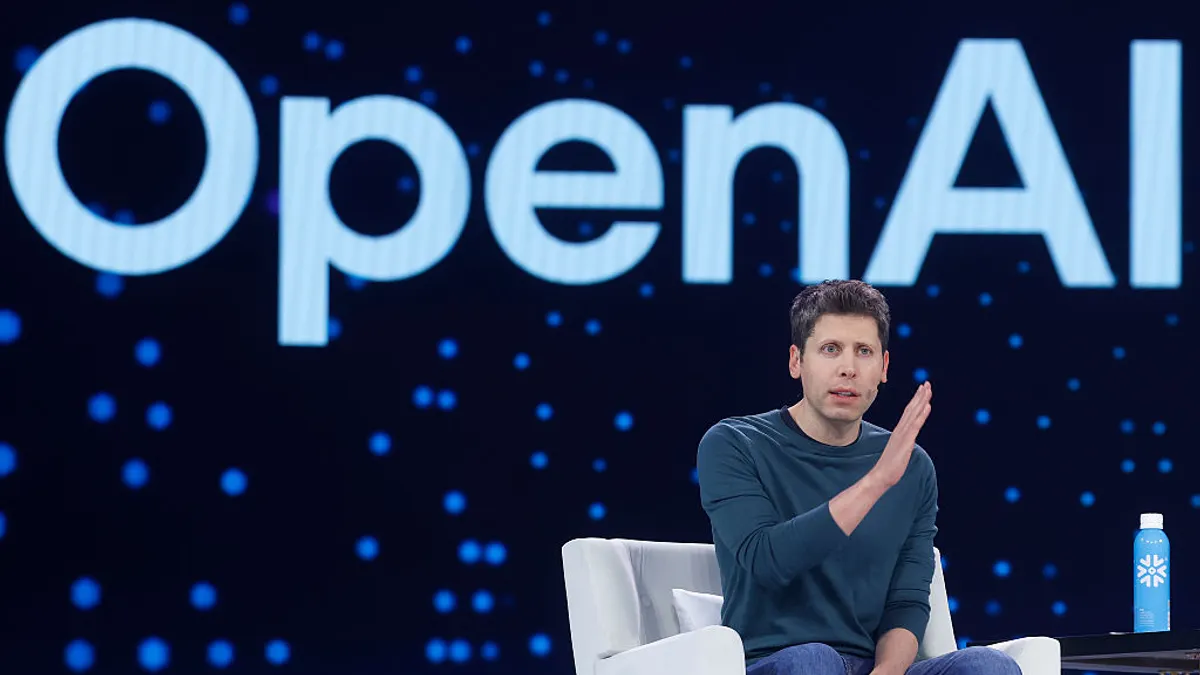
OpenAI and PwC are partnering to build AI agents for finance and accounting use cases, including planning, forecasting, reporting, procurement, payments, treasury, tax, and accounting. The focus is on practical workflows where agents can coordinate work under human supervision.
My take: This is the shift CFOs should watch closely. AI in finance is moving from assistance to workflow execution. That creates real upside, but only if finance defines where agents can act, what humans must approve, and how controls will be documented.

AI adoption is outpacing many IT governance models' ability to handle it. CFOs now have to help rethink oversight so the business can move quickly without creating weak controls, fragmented tools, or unclear accountability.
My take: The best answer is not to slow down every AI project. The better answer is to modernize governance, so finance, IT, risk, and operators know what good adoption looks like before tools spread across the business.
FINANCE STACK: The AI Control Register

AI use cases can look small until they start touching real workflows. A team uses an agent to draft variance commentary. Another uses one to support forecasting. Another uses it for procurement analysis. Another tests it inside reporting. Each use case may look reasonable on its own.
The risk comes when no one can see the full picture.
That is why finance needs an AI control register.
Track five things:
Use case
What finance or business workflow is the AI supporting?
Action level
Is it summarizing, recommending, coordinating, or executing?
Data access
What systems, files, reports, or sensitive information can it see?
Human approval
Where does a person review, approve, or override the output?
Evidence
What proof shows the tool is improving speed, accuracy, control, cost, or decision quality?
Control check:
Can your team see every AI use case touching finance data, finance workflows, or finance decisions? If not, adoption may be outpacing oversight.
The practical finance shift this week is that CFOs need sharper visibility into both the outside environment and the inside operating model. Pricing signals help with planning. AI agents help with execution. Governance determines whether the business can trust the result.
The challenge now is not a lack of information. It is deciding which technical shifts actually matter before they spill into finance through cost, risk, or operating complexity. That is why signal quality matters more than volume. The faster IT moves, the more useful it becomes for finance leaders to stay close to the conversations shaping what will need governance next.
That is why WeAreDevelopers World Congress North America is worth a look. It offers a useful window into the developer and technology trends that can become tomorrow’s finance decisions.
Built for builders. Not buzzwords. San José 2026

500+ speakers. 18 content tracks. Workshops, masterclasses, and the people actually shipping the tools you use every day. WeAreDevelopers World Congress — September 23–25. Use code GITPUSH26 for 10% off.
CFO PULSE
Where does your team need stronger signal control right now?
THE BOTTOM LINE
The CFO role continues to move closer to the business's operating center.
That is not because finance owns every tool or every system. It is because finance owns the quality of the decisions that those tools and systems are supposed to improve.
Price expectations are only useful if they sharpen the plan. AI agents are only useful if they improve the workflow without weakening control. Governance is only useful if it helps the business operate responsibly rather than hide behind process.
The next stage of finance leadership is not about collecting more signals.
It is about knowing which ones matter, who owns them, and what decision changes next.
Until next edition. — Marcus Reid
P.S. If your team has a clean way to track AI agents, pricing assumptions, or governance risks across finance, reply directly to this email. I am collecting practical examples of how CFOs are turning new signals into better operating decisions.

Marcus Reid
Editor-in-Chief
I spent 14 years as a CFO at a $2.4B public manufacturing company. I've watched CFOs lose their jobs not because they got the numbers wrong, but because they got the story wrong. That gap is what CFO Executive Insights exists to fix. No fluff. Just practical playbooks for modern finance leaders.
P.S. Interested in reaching our audience? You can sponsor our newsletter here.
Disclaimer: The content in CFO Executive Insights is for informational and educational purposes only and does not constitute financial, legal, or professional advice. Always consult a qualified advisor before making decisions related to your organization's finances, strategy, or operations. No advisory relationship is created by this publication.
